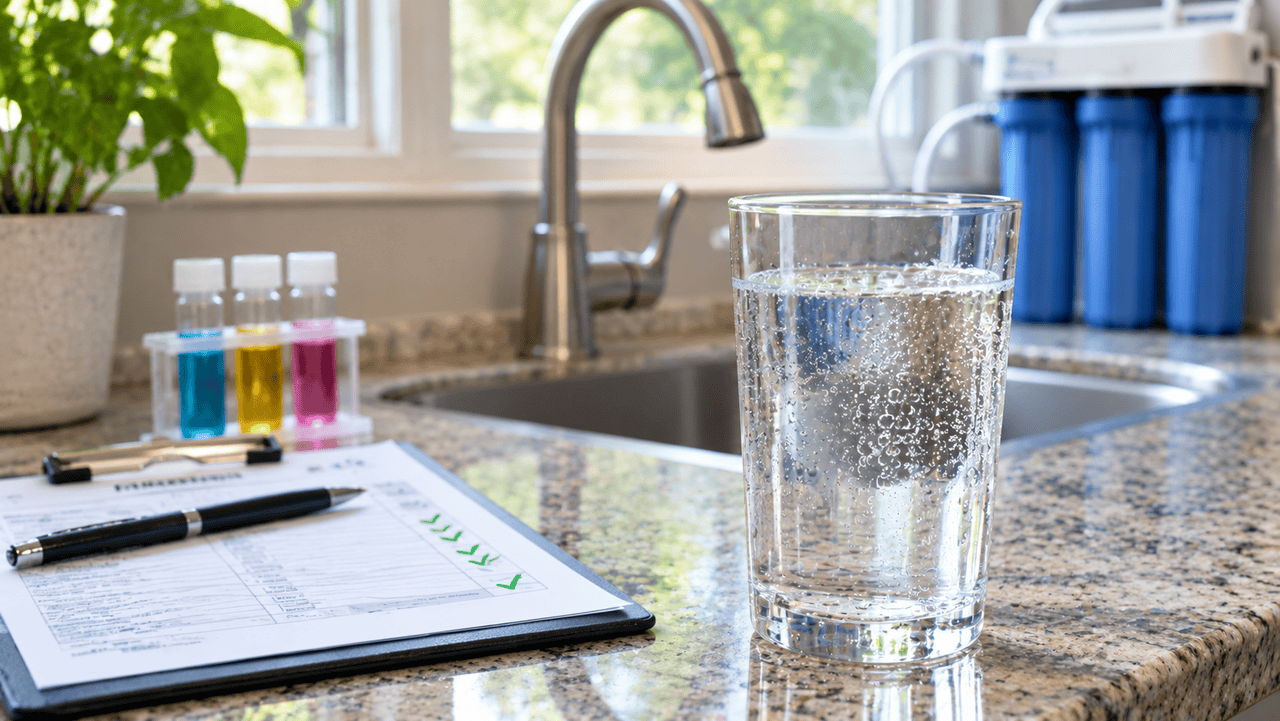
Well water can be safe to drink, but that safety is never guaranteed, and unlike your neighbor on city water, no federal agency is watching over your tap. Private well owners carry the full weight of water quality on their own shoulders, from testing schedules to treatment decisions to infrastructure upkeep. What makes this deeply concerning is that the most dangerous contaminants, including bacteria, nitrates, arsenic, and PFAS, leave no trace you can detect with your senses. Water that runs clear, smells clean, and tastes fine can still carry real health risks. The only way to know what is truly coming out of your well is to test it. Do not leave it to chance.
Understanding the Safety of Private Well Water
The Safe Drinking Water Act, the federal law that governs public water systems, does not apply to private domestic wells (per the EPA Private Wells Guide). That is not a loophole; it is a deliberate boundary. Roughly 15% of the U.S. population, representing more than 43 million people across over 23 million households, draws its drinking water from private wells, and every one of those households is responsible for its own water quality monitoring, treatment, and maintenance (per the EPA Private Wells Guide). There is no utility sending annual water quality reports, no state inspector checking your wellhead, and no centralized treatment system standing between your aquifer and your kitchen faucet.
Well depth adds another layer of complexity. Drilled private wells in the United States typically range from approximately 100 to 400 feet deep (per the EPA About Private Water Wells). Shallower wells within that range are considerably more exposed to surface runoff, such as agricultural chemicals, septic leachate, and road salt, because there is less soil and rock to filter contaminants before they reach the water table. In the Piedmont Triad region of North Carolina, including Winston-Salem, Greensboro, and High Point, and across the rural stretches of Virginia, private wells are a fixture of daily life. The geology and land use patterns in these areas, featuring a mix of farmland, older industrial sites, and dense residential development, create a varied contamination risk profile that deserves serious attention from any well owner.
Common Well Water Contaminants and Health Risks
A major USGS study of 2,100 private wells found that roughly one in five contained at least one contaminant exceeding human-health benchmarks (per the EPA Private Wells Guide). That figure should give any well owner pause, especially because the contaminants driving those exceedances are largely undetectable without laboratory analysis. You cannot see them. Installing point-of-use water filtration systems is one practical response, but filtration only works when you know what you are filtering for, which circles back to the necessity of testing.
The contaminants threatening private well water fall into two broad categories, each with distinct health implications:
- Coliform bacteria are among the most common biological hazards in well water, typically introduced through surface runoff, cracked well casings, or proximity to septic systems. Their presence signals that other pathogens may also be present.
- Nitrates pose a particular risk to infants and pregnant women. The EPA’s maximum contaminant level for nitrates is 10 mg/L (per the EPA Nitrate and Nitrite Rule Training), and agricultural runoff across North Carolina and Virginia makes elevated nitrate levels a genuine regional concern.
- Heavy metals including lead and arsenic can leach naturally from geological formations or enter groundwater through industrial activity. Mountaintop coal mining in neighboring West Virginia has documented adverse impacts on groundwater, with recorded instances of domestic well water contamination (per the EPA West Virginia Mining Study).
- Iron and sulfur are primarily sensory concerns, causing metallic taste, rotten-egg odor, and rust-colored staining, but manganese warrants separate attention. Beyond discoloring water and staining household surfaces, manganese can interfere with common chlorine-based disinfectant residual testing methods, which complicates accurate water quality assessment at the household level (per the EPA 19th Annual Drinking Water Workshop Summaries).
While you are getting your well tested, we are here to help.
If you are waiting on lab results or working through a treatment decision, your family still needs clean, reliable drinking water in the meantime. Our spring water delivery service brings pure Blue Ridge Mountain spring water straight to your door in Winston-Salem, Greensboro, High Point, and across North Carolina and Virginia, with no delivery charges, no fuel surcharges, and honest, straightforward pricing. We believe in transparency, meaning you will find no surprise fees on your bill, ever.
Our family has been doing this for generations, with roots in the region going back to 1866. We treat every customer like a neighbor, because in most cases, that is exactly what you are. We are proud to offer pure water delivered to your door, trusted by families like yours.
“Mountain Park Spring Water has exceeded all of our expectations. From my first interaction with them I felt like I was talking to a friend. Their customer service is top notch. The process from ordering to delivery to payment is very streamlined and easy. And the water! It is the most delicious water I have ever had. I’ve recently added a bottle to my monthly order because we are going through it so fast. Top marks for this company. Would highly recommend them to anyone looking for a water delivery service!”, Karen Cooper
“Overall great company. Multiple ways to order and get refill updates via email, text or phone call. Pricing is very fair and they’ve never missed a delivery after more than a year of service. Highly recommended”, Brian Huff
How to Test and Monitor Your Well Water Quality
[Inline Image]A professional technician collecting a water sample from a home tap for certified laboratory testing. The technician wears nitrile gloves and holds a sterile collection vial beneath a stainless steel kitchen faucet. Warm, natural light fills a modest residential kitchen. Photorealistic, documentary-style composition with soft shadows and a clean, uncluttered background.[/Inline Image]
The CDC and EPA both recommend testing private wells for coliform bacteria and nitrates at minimum once per year (per the EPA Protect Your Home’s Water Guide). Annual testing establishes a baseline and catches slow-developing contamination before it becomes a health crisis. Beyond the annual schedule, testing should happen immediately after any noticeable change in taste, odor, or appearance, and following major flooding, nearby construction, or known spills in your area. Groundwater does not respect property lines. In Virginia’s portion of the Chesapeake Bay watershed, groundwater discharge has been identified as a direct pathway for herbicides and agricultural chemicals to migrate into local streams and water sources (per the USGS Environmental Health Program).
Home test strips have their place for quick, general screening, but they lack the sensitivity required to detect many health-critical contaminants at low concentrations. They are not enough. A certified laboratory provides precise measurements you can compare directly against EPA benchmarks, and that comparison is what truly tells you whether your water is safe. Your local health department in North Carolina or Virginia can furnish a list of state-certified testing labs, and many of those labs will mail you a sterile collection kit with detailed instructions included.
The testing process itself is simple when followed precisely:
- Contact your local health department or a certified laboratory to obtain a sterile sample collection kit.
- Collect the water sample exactly as instructed, which typically means letting the tap run for a set period, avoiding any contact with the inside of the cap or the rim of the bottle, and filling to the marked line.
- Return the sample to the laboratory as quickly as possible; most biological samples have strict viability windows, and delays can skew results.
- Review your findings against EPA health benchmarks for each contaminant tested, and consult your local health department if any value exceeds the recommended limit.
“Dr. George Adcock Carter, my great-grandfather, began selling and delivering bottled spring water in the Danville, Va area in 1866”, Stewart Douglas, Owner
Choosing the Best Water Treatment Systems for Home
When lab results reveal a specific problem, treatment technology needs to match the contaminant. One size never fits all. Granular activated carbon (GAC) and ion exchange resins are among the most widely recognized technologies for removing PFAS and other persistent organic chemical mixtures from drinking water (per the EPA 19th Annual Drinking Water Workshop Summaries). Understanding how is purified water made through these processes can help homeowners evaluate what a treatment system is truly accomplishing. That said, modeling the long-term performance of GAC and ion exchange at the scale of a single private well, rather than a large municipal system, remains technically complex, and predicting exact treatment costs over time involves real uncertainty. A system well-suited to one contaminant profile may be inadequate or unnecessarily expensive for another.
[Inline Image]A sleek point-of-use bottleless water filtration system installed in a modern home kitchen. The unit sits under a counter with a slim dispensing faucet mounted on the countertop surface. Clean, well-lit kitchen environment with white cabinetry and warm natural light streaming through a window. Photorealistic product-in-environment style.[/Inline Image]
Skip the maintenance headache with a fully managed filtration solution.**
Our Point-of-Use Bottleless Water Filtration System takes the complexity out of home water treatment. We handle all maintenance, sanitization, and filter replacements, so you just turn on the tap. The system is backed by a satisfaction guarantee with a full refund available within the initial trial period, and there are no long-term contracts, just flexible month-to-month terms.
For households that prefer bottled water, our 5-gallon purified water delivery service covers Winston-Salem, Greensboro, High Point, and the surrounding region. Call us at 336-761-0884 to get started.
“After dealing with two other delivery services for water and both were a frustrating nightmare to deal with I contacted Mountain Park and the difference in service was night and day. They were friendly, caring, and the entire process was a breath of fresh air (and water ). Jonathan delivered our water today and he was extremely friendly, went over the process with me and also let me know that when they deliver they only replace and charge for whatever number of empty bottles as they would not want us to pay for what we didn’t need. He even brought them into the house and placed them on our bottle rack. It is exactly how any delivery service should be. The fact they are local and family owned just adds to our satisfaction. If you’re still not sure, just trust me and call them. They are a joy to work with. I mean just look at the five star reviews. Almost 200 people so far have said the same experience. It’s just delightful to finally find a company that truly understands that it’s not just the water, but the delivery that mat”, Wayne Gibson
Well Water vs. Municipal Water Safety
The core distinction between private well water and municipal water comes down to who bears responsibility for safety:
- Regulation: Municipal water is strictly governed under the Safe Drinking Water Act, with mandatory testing, treatment standards, and public reporting requirements. Private well water falls entirely outside that regulatory framework (per the EPA Private Wells Guide).
- Testing frequency: A municipal water utility tests its supply thousands of times per year. A private well owner is responsible for arranging and paying for every single test.
- Treatment: Municipal systems use multi-barrier treatment, including coagulation, filtration, and disinfection, before water reaches any tap. Well water arrives at your faucet carrying whatever the aquifer delivers, unless you have installed and maintained your own treatment system.
- Cost structures: Expenses differ considerably as well. Municipal water carries ongoing utility bills, while well ownership involves upfront drilling costs, ongoing electricity for the pump, and periodic maintenance and repair expenses that can be difficult to anticipate.
Some homeowners genuinely prefer well water for reasons that are not unreasonable, as it typically contains no added chlorine or fluoride, and naturally occurring minerals can give it a unique profile. There is a case to be made that well water from a clean, well-maintained source is excellent drinking water. But it takes work. The catch is that keeping it clean and well-maintained requires consistent effort and investment, year after year. For families who want the peace of mind that comes with regulated, professionally managed water quality, without the overhead of running their own treatment system, a managed delivery service or a professionally maintained filtration system replicates that assurance at the household level.
Frequently Asked Questions About Well Water Safety
How do I know if my well water is safe to drink?
Professional laboratory testing is the only reliable answer. A certified lab can screen for bacteria, nitrates, heavy metals, and chemical contaminants, and results should be compared against EPA health benchmarks. Taste, smell, and visual clarity are not reliable indicators, as many of the most hazardous contaminants are completely odorless and invisible.
What is the downside of having well water?
The primary downsides are the ongoing responsibilities that come with ownership: regular testing, maintenance of the well casing and pump, and the cost and complexity of home treatment systems if contamination is found. Mineral buildup can affect plumbing and appliances over time. There is also a practical vulnerability that is easy to overlook. During a power outage, the well pump stops working, leaving the household without running water entirely.
Is well water the healthiest water to drink?
It can be. Well water from a clean, uncontaminated aquifer is often rich in naturally occurring minerals and free from the treatment chemicals used in municipal systems. Whether it is truly healthy depends entirely on the quality of the underlying groundwater and the condition of the well infrastructure. Without regular testing and appropriate filtration, the same source that produces excellent water one year can carry health risks the next.
What does well water do to your body?
Clean, properly filtered well water provides essential minerals and hydration without issue. Contaminated well water is a different matter, as bacterial contamination can cause acute gastrointestinal illness, while long-term exposure to heavy metals like lead or arsenic, or to chemical runoff, carries more serious chronic health risks. The effects depend entirely on what is truly present in the water.
What is the unhealthiest water to drink?
Water contaminated with pathogenic bacteria, parasites, toxic industrial chemicals, or high concentrations of lead or arsenic ranks among the most dangerous. Untreated surface water and untested well water exposed to agricultural or industrial runoff fall squarely in that category. The absence of symptoms does not mean the water is safe, as some of the most harmful contaminants accumulate in the body over years before health effects become apparent.
Owning a private well is a serious responsibility, and the stakes are high enough that it deserves the same attention you would give any other critical system in your home. Annual testing, prompt follow-up when results raise concerns, and a reliable water source during treatment transitions are the pillars of safe well ownership. You are not alone. Our family has been serving neighbors across North Carolina and Virginia since 1979, with roots in the region going back to 1866, and we understand what it means to be a trusted part of your daily life. We’re always here when you need us, and every delivery we make, every filter we service, carries that same commitment.
Ready for water you do not have to worry about?
Call us at 336-761-0884 or visit us at 2835 Lowery Street. Our spring water delivery and managed filtration services come with no delivery charges, no fuel surcharges, and honest, straightforward pricing. You can count on no surprise fees, just pure, delicious water from our family to yours.