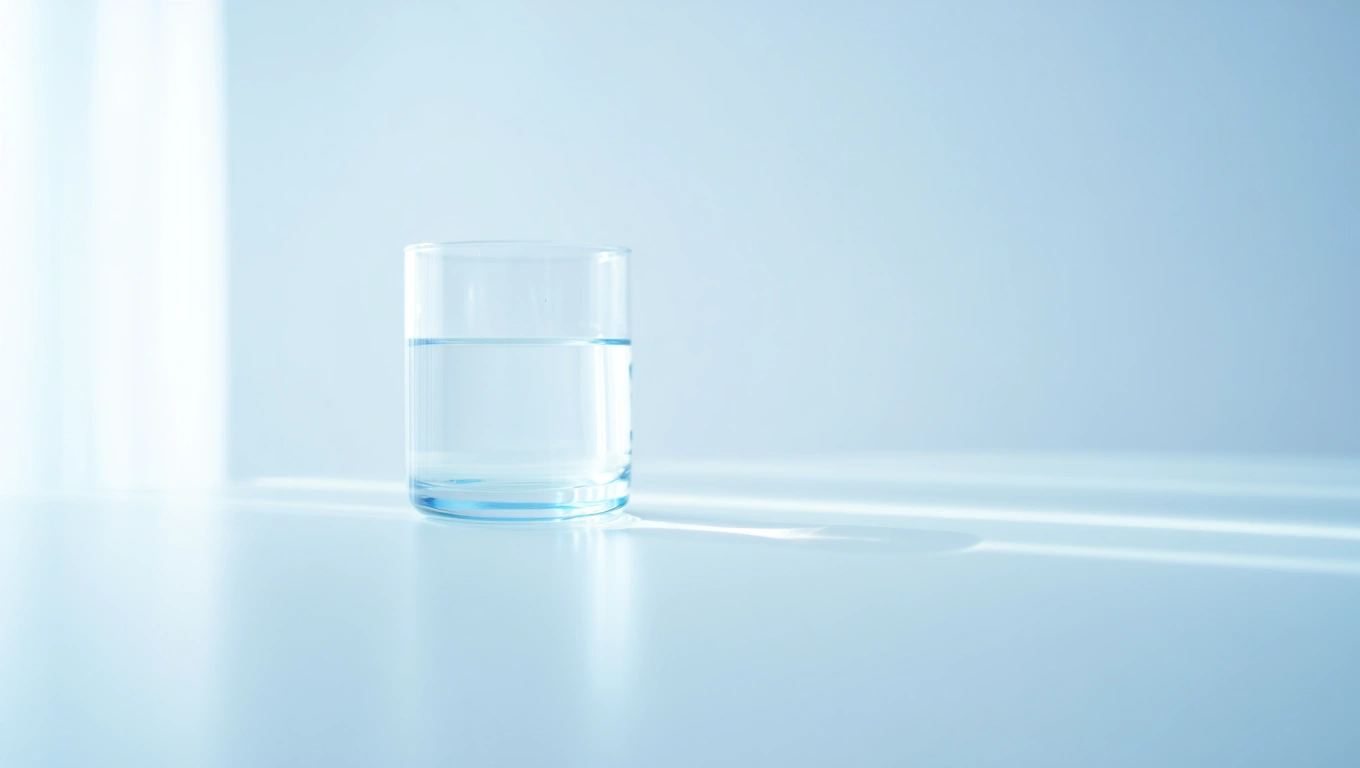
Still water is non-carbonated water in its natural, flat state: no dissolved carbon dioxide, no bubbles, and no effervescence. When you fill a glass from a spring-fed source or crack open a bottle of still mineral water, what you are drinking is exactly what the name suggests: water that stays calm. Unlike sparkling water, seltzer, or club soda, still water contains no carbonic acid and creates no fizz. That distinction matters more than most people realize, both for daily hydration and for the specific ways you use water throughout the day.
The different types of bottled still water, including spring, mineral, artesian, and purified, each carry their own sourcing story and mineral profile. Understanding those differences helps you make a more deliberate choice about what goes into your body, rather than defaulting to whatever is cheapest on the grocery shelf.
Under regulatory guidelines, still water is defined as non-carbonated water intended for human consumption, sealed in bottles or containers, with no added ingredients except for safe antimicrobial agents or fluoride within established limits, according to the U.S. Food and Drug Administration. The FDA governs bottled still water under the Federal Food, Drug, and Cosmetic Act, which sets standards of identity, quality benchmarks, and current good manufacturing practices to ensure both safety and honest labeling. Worth noting: beverages marketed as sparkling water, seltzer, soda water, tonic water, or club soda fall outside the FDA’s bottled water classification entirely; they are regulated as soft drinks.
At Mountain Park Spring Water, that regulatory clarity aligns with a much older commitment. As owner Stewart Douglas puts it, “Dr. George Adcock Carter, my great-grandfather, began selling and delivering bottled spring water in the Danville, VA area in 1866,” which shapes how we approach every delivery today: honest pricing, no hidden fees, and water you can trust. You can read more about our story and the family behind the bottles.
What makes still water distinct from other beverages comes down to a handful of consistent characteristics:
- Zero Carbonation: Completely flat and free of dissolved carbon dioxide gas, making it gentle on the stomach and easy to drink in large volumes throughout the day.
- Natural and Treated Sources: Can be drawn from pristine underground springs, deep artesian aquifers, or purified municipal systems, with each producing a different taste and mineral profile.
- Strict Safety Standards: Regulated by the FDA under the Federal Food, Drug, and Cosmetic Act to ensure safety, consistent quality, and truthful labeling across all bottled water categories.
- Enamel-Safe pH: Maintains a neutral pH level, unlike carbonated beverages that form carbonic acid in the mouth, making it the safest option for continuous, all-day sipping.
Understanding the Different Types of Bottled Still Water
The FDA classifies bottled still water into distinct categories based on geological origin and collection method, and those distinctions are not just administrative labeling; they reflect genuinely different products with different flavor profiles and mineral compositions.
Artesian well water comes from an aquifer under natural pressure, which pushes the water above the aquifer level before it is collected. Well water, by contrast, is drawn from an aquifer via a bored or drilled hole without that same pressurized uplift. Both originate underground, but the pressure differential in artesian sources often means less surface exposure and a cleaner baseline before any treatment. Municipal tap water is also technically still water, meaning it is non-carbonated and intended for consumption, but it typically undergoes extensive chemical treatment that can leave a detectable chlorine taste and odor, which is why many households and offices seek an alternative.
Spring water occupies a different category altogether. To carry that label, water must originate from an underground formation that flows naturally to the earth’s surface, and it must be collected either at the spring itself or through a borehole that taps directly into the feeding formation, per FDA standards. That requirement preserves the purity of the source. If you are curious about the nutritional and wellness case for choosing spring over other options, the benefits of drinking spring water go well beyond taste.
Still mineral water carries the most specific sourcing requirement of all. The rules are strict. It must originate from an underground source and naturally contain at least 250 parts per million (ppm) of total dissolved solids, with no minerals added after collection, according to the U.S. Food and Drug Administration. That mineral threshold is highly purposeful, giving true mineral water its characteristic flavor and the subtle complexity that highly processed purified water simply cannot replicate. Calcium and magnesium, two of the most common naturally occurring minerals in spring and mineral water, contribute both to that crisp taste and to the body’s baseline mineral intake.
[Inline Image]PLACEHOLDER A clear glass of still spring water resting on a worn wooden kitchen table, photographed in soft, warm natural window light. The water is perfectly transparent, with no bubbles. The composition is close and intimate, emphasizing purity and calm. Photorealistic style with a clean, uncluttered background suggesting a home kitchen. Color palette of warm neutrals and cool glass tones.[/Inline Image]
How Still Water Is Treated and Purified for Safety
Not all still water arrives at the bottle straight from a pristine underground spring. Much of the bottled still water on the market starts as municipal water that has been treated to meet purified water standards. The treatment methods vary, and each targets a different category of impurity. Each process has a purpose.
- Distillation: Vaporizes water to separate it from dissolved minerals and impurities, then condenses the vapor back into liquid; one of the oldest and most thorough purification methods available.
- Reverse Osmosis: Forces water through semi-permeable membranes under pressure, stripping out dissolved solids, heavy metals, and most minerals in the process.
- Absolute 1-Micron Filtration: Physically removes particles larger than one micron from the water column, including the gastrointestinal pathogen Cryptosporidium, which is resistant to standard chlorine disinfection.
- Ozonation: Introduces antimicrobial ozone gas into the water to eliminate bacteria and pathogens without leaving the residual taste and odor that chlorine-based disinfection produces.
Many bottlers combine these methods, running water through reverse osmosis first, then ozonation, rather than relying on any single process. The result is a product that meets or exceeds federal quality standards regardless of its original source.
Safety Standards: Bottled Still Water vs. Tap Water
The comparison between bottled still water and municipal tap water is more nuanced than the marketing on either side tends to acknowledge. Both are regulated, both are generally safe, and both serve the same fundamental purpose. But they are not identical. Where they differ is in the specific contaminant limits and the infrastructure through which the water travels before it reaches you.
- Stricter Lead Limits: The FDA enforces a lead limit of 5 parts per billion (ppb) for bottled water, which is significantly tighter than the EPA’s 15 ppb threshold for tap water. The reasoning is direct: bottled water never passes through lead service lines or aging household plumbing, so the exposure pathway that necessitates the higher tap water limit simply does not exist for bottled products.
- Low Contaminant Vulnerability: In an FDA exploratory survey of 51 bottled water samples, only two contained detectable levels of perchlorate near the 0.5 ppb limit of quantitation, according to the FDA Exploratory Survey on Perchlorate. That is a narrow dataset and should not be read as a complete safety guarantee, but it does reflect the low environmental contamination burden that sealed bottled water typically carries.
- Sterility Distinction: Standard bottled still water is not sterile unless explicitly labeled as such. Bottled water marketed as sterile for infant use must meet separate, more rigorous FDA sterility standards specifically designed to prevent pathogens like Cronobacter. For everyday adult consumption, standard bottled water handled with the same care as safe tap water presents no sterility concern.
Tired of dealing with the harsh taste of municipal tap water or the hassle of hauling heavy water bottles from the grocery store? At Mountain Park Spring Water, we deliver pure, natural spring water straight to your door with no delivery fees and no fuel surcharges, ever. Experience the difference that honest, simple pricing and friendly, local service can make for your home or office. Explore Our 5-Gallon Spring Water Delivery today and let us take care of your hydration needs.
Still Water vs. Carbonated Water: Which Is Best for Hydration?
Still water is entirely non-carbonated. Carbonated water contains dissolved carbon dioxide that forms carbonic acid when it enters the mouth, creating the familiar tingle and effervescence. On a cellular level, both hydrate the body with similar efficiency; the water molecules themselves do the same work regardless of whether they arrived with bubbles. Where the two diverge is in the physical experience of drinking them.
Carbonation produces a satiety signal. The gas expands in the stomach, triggering a sense of fullness that can cause people to stop drinking before they have met their hydration needs for the hour. For someone trying to consume adequate fluid volume across a full workday, that premature fullness is a genuine obstacle. Still water does not create that resistance: it goes down easily, in whatever quantity you need, without the bloating or the burping that carbonated options sometimes produce.
The dental and digestive picture also favors still water for everyday use. Plain carbonated water is only mildly acidic, and the evidence that moderate consumption damages enamel is not particularly strong. But still water is completely pH-neutral, making it the unambiguous choice for continuous sipping throughout the day without any cumulative acid exposure. For people managing acid reflux, GERD, or a sensitive digestive tract, the gas in carbonated water can trigger discomfort that still water simply does not. Our customer reviews reflect this consistently: people who switch to a reliable supply of natural spring water at home or in the office find it noticeably easier to stay hydrated without thinking about it.
“Mountain Park Spring Water has exceeded all of our expectations. From my first interaction with them I felt like I was talking to a friend. Their customer service is top notch. The process from ordering to delivery to payment is very streamlined and easy. And the water! It is the most delicious water I have ever had. I’ve recently added a bottle to my monthly order because we are going through it so fast. Top marks for this company. Would highly recommend them to anyone looking for a water delivery service!”, Karen Cooper, Verified Customer
What Is Still Water Used For? Beyond Daily Drinking
Drinking is the obvious use, but still water’s utility extends into the kitchen and throughout the household in ways that carbonated or heavily chlorinated tap water cannot match.
For coffee and tea, still water is the preferred brewing medium among people who take flavor seriously. Chlorine, even at safe concentrations, suppresses the aromatic compounds in coffee grounds and tea leaves, dulling the cup. Carbonation introduces acidity and interferes with extraction. Still water, particularly spring water with a balanced mineral content, allows the natural flavor of the beans or leaves to come through without competition. The same logic applies to cooking delicate grains like rice or quinoa, where the water becomes part of the dish, and to preparing infant formula, where purity is non-negotiable and the stakes of contamination are higher than for adult consumption.
Still water also extends the lifespan of household appliances. It prevents mineral buildup. Steam irons and humidifiers that run on tap water collect mineral deposits over time, clogging internal components and reducing efficiency. Using still water, particularly purified or distilled still water with low dissolved solids, dramatically slows that buildup and keeps the equipment functioning longer.
[Inline Image]PLACEHOLDER A modern countertop water dispenser in a bright, clean office breakroom, with a 5-gallon bottle of Mountain Park Spring Water mounted on top. The dispenser has a stainless steel front panel and glowing indicator buttons. The room is well-lit with natural light from a nearby window. Photorealistic commercial photography style, clean and professional, conveying reliability and workplace hydration convenience.[/Inline Image]
Whether you prefer the crisp taste of still spring water or want to accommodate a variety of preferences in your office, having the right equipment makes all the difference. We offer high-quality water dispensers equipped with hygienic stainless steel tanks to deliver perfectly chilled or hot water on demand. Learn more about choosing a hydration system that fits your space, and let our family help yours stay refreshed.
How Much Still Water Should You Drink Daily?
Daily intake recommendations vary by body weight, activity level, and climate, but the recognized benchmarks give a useful starting point. According to the Centers for Disease Control and Prevention, the general guidance is approximately 3.7 liters (125 ounces) per day for men and 2.7 liters (91 ounces) per day for women, figures that account for all fluid sources, not just water consumed on its own.
- Recognized Health Guidelines: The CDC’s baseline of 3.7 liters (125 oz) for men and 2.7 liters (91 oz) for women represents total daily fluid intake across food and beverages, not a target for plain water alone. Still water is the most efficient way to hit that number without adding sugar, sodium, or calories.
- Adjust for Activity: Physical exertion, hot weather, and dehydrating beverages like coffee or alcohol all increase your fluid requirements. On a summer afternoon in North Carolina, your actual need can run meaningfully higher than the baseline figure.
- Listen to Your Body: Thirst is a reliable early indicator, but urine color is a more objective gauge: pale yellow signals adequate hydration, while dark amber suggests you are behind. Waiting until you are thirsty to drink means you are already playing catch-up.
- Keep It Accessible: Having a 5-gallon dispenser in your home or office removes the friction that causes most people to underdrink. When cold, clean water is within arm’s reach, hitting your daily benchmarks stops feeling like a discipline problem.
What Is Still Water in a Restaurant?
When a server asks “still or carbonated?” at the start of a meal, they are asking a simple question with a practical answer. Ordering still water means you want non-carbonated water, with no bubbles and no fizz. Depending on the restaurant, that might arrive as filtered tap water in a carafe, or as a premium bottled still mineral water with a label you can read.
The distinction matters more in certain dining contexts than others. Carbonated water is sometimes ordered as a palate cleanser between courses, where the carbonation actively serves a purpose. Still water, by contrast, is the neutral baseline: it does not compete with the flavors of the food, does not create gas mid-meal, and does not carry the mild acidity that carbonated options introduce. For most diners, it is simply the default, and there is nothing wrong with that. If you are at a restaurant that offers a premium still mineral water option, the mineral content and source region on the label are worth a glance; they tell you something real about what you are drinking.
Frequently Asked Questions About Still Water
Is tap water considered still water?
Yes, tap water is a form of still water because it is non-carbonated. However, tap water is sourced and treated by municipal public water systems and must travel through local pipe networks, which can affect its taste and odor. Many people prefer bottled still spring water for its superior taste and natural mineral profile, and it is worth separating fact from fiction on this topic: there are several persistent myths about bottled water that tend to cloud the conversation around safety and quality.
Why is it called “still” water?
The name comes from what the water does, or rather, what it does not do. Still water lacks the movement, bubbles, and effervescence that carbonation creates. It stays calm and flat in the glass, representing water in its unaltered, non-fizzy state. The term is most commonly used in the context of bottled water and restaurant service, where the contrast with carbonated water makes the distinction immediately practical.
Is still water healthy to drink?
Yes, and for most people it is the healthiest baseline for daily hydration. Pure still water contains no sugars, artificial sweeteners, calories, or acids. It places no burden on the digestive system, poses no risk to tooth enamel, and delivers fluid to the body’s cells without any competing ingredients. For people with acid sensitivity or gastrointestinal conditions, it is often the only form of hydration that does not trigger symptoms.
What is the difference between still water and purified water?
Still water is a broad category that encompasses any non-carbonated water, regardless of how it was sourced or treated. Purified water is a specific subcategory within that broader group: still water that has been processed through distillation, reverse osmosis, or similar methods to remove dissolved minerals and impurities. The result is a highly consistent, neutral-tasting product. Spring water and mineral water, by contrast, retain their naturally occurring dissolved solids and are also still water, just with a different treatment philosophy.
Can you float in still water?
Yes, maintaining the ability to float on the surface of still water is more manageable than in moving water because you do not have to fight current or wave action. The absence of disturbance means you can hold a relaxed, stationary position more easily, provided you use proper floating technique: filling your lungs with air and distributing your weight evenly across the surface.
Staying properly hydrated is genuinely one of the highest-return habits available to most people, and the barrier to doing it well is lower than it seems. Clean, great-tasting still water delivered reliably removes the two most common reasons people underhydrate: inconvenience and poor taste. At Mountain Park Spring Water, we have been solving both of those problems for families and businesses across North Carolina and Virginia for generations, carrying a legacy that stretches back to 1866. Stewart Douglas and Robert Douglas personally answer every phone call and respond to every email: there is no automated phone tree, no runaround.
Customers like Brian Huff put it plainly: “Overall great company. Multiple ways to order and get refill updates via email, text or phone call. Pricing is very fair and they’ve never missed a delivery after more than a year of service. Highly recommended.” Wayne Gibson described his first experience this way: “After dealing with two other delivery services for water and both were a frustrating nightmare to deal with I contacted Mountain Park and the difference in service was night and day. They were friendly, caring, and the entire process was a breath of fresh air (and water). Jonathan delivered our water today and he was extremely friendly, went over the process with me and also let me know that when they deliver they only replace and charge for whatever number of empty bottles as they would not want us to pay for what we didn’t need. He even brought them into the house and placed them on our bottle rack. It is exactly how any delivery service should be. The fact they are local and family-owned just adds to our satisfaction.”
Ready to experience the pure, refreshing taste of natural spring water? If you live or work in Winston-Salem, Greensboro, High Point, or the surrounding Triad region, we are ready to serve you. We make ordering simple and only charge you for the empty bottles we replace. Contact us today at 336-761-0884 to set up your water delivery service in Salisbury or on local North Carolina and Virginia routes, and let our family take care of yours.